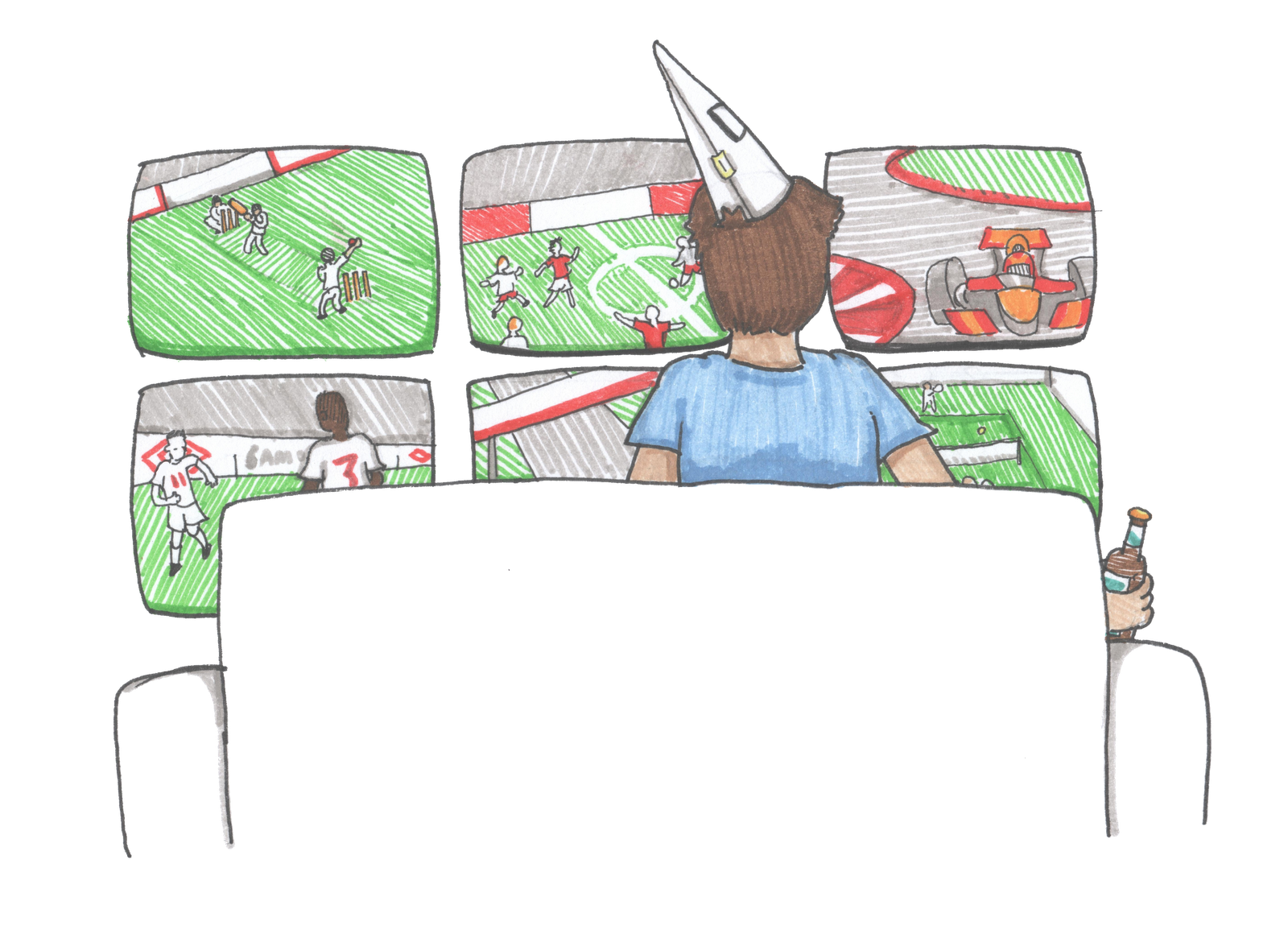
A tribute to the stuff that makes life less boring.

27/04/2015

Can England give Ben Stokes the responsibility he needs?

Notice the classic armpit sniff in the delivery stride.
As a schoolboy, Ian Botham’s friends called him Bungalow, not because of his physique, but because he had ‘nothing upstairs’. Later in life, media commentators had a tendency to portray him as a talented thug. None of this did him any harm whatsoever. With Botham, most people accepted that you have to take the whole package. Being boorish and acting the clown in his case are side-effects of a single mindedness and a clear vision: “I am Ian Botham. The way that I do things is invariably the best way to do it.” This surety and uncluttered mind are key to success in cricket, a game which more than most is played between the ears.

Cricket writers have been quick to notice the similarities between Beefy and the current heir to his throne, Ben Stokes. For one thing, he has a growing reputation for sledging. Most recently he got a little too nasty with Marlon Samuels, earning him a proper telling off from the umpire. If he takes it too far sometimes, this is nothing new to England fans - last year he took out the frustration of a failed innings on a locker. The result was a broken hand, much to the chagrin of the ECB. Not realising that lockers are usually made from metal, I’m sure Stokes would accept, is the act of a man with nothing upstairs.

But like a young Botham, his immense talent is clear. As a batsman, he’s orthodox, pleasing on the eye, and seems to time the ball effortlessly. In 2013, Stokes hit 120 on a cracked Perth pitch against an Australian bowling attack led by Mitchell Johnson and Ryan Harris at the peak of their powers. His batting was flawless that day, all assured technique and natural timing. A true all rounder, Stokes is currently England’s quickest bowler. Capable of control, and he hits the pitch hard on an awkward length for the batsman. He has shown this quality too rarely thus far though - His bowling in particular looks like it needs more work. His England career has contained a few too many soft dismissals, and inconsistent (and often wicketless) bowling spells littered with no balls. Having not yet turned 24, my hope is that he is nowhere near the finished article.

Stokes has an obvious competitive edge and an intensity which makes him stand out. He’s been in and out of squads a little since his debut, both because of injury and lack of performance. In his defence, his effectiveness has been limited because he hasn’t been given enough responsibility. He’s rarely been trusted with the ball when it’s at it’s hardest, with Alistair Cook tending to bowl Anderson and Broad for sizable opening spells regardless of whether they’re bowling well.

On paper at least, England’s batting is strong, with county stars like Adam Lyth and James Taylor unable to get a run in the Test side. This has meant Stokes has had to bat 7 and 8, a waste of his talents. When in the groove, his innings’ tend to be chanceless, and he has the capacity to dominate an attack over a sustained period. The England hierarchy shouldn’t be afraid to stick him in at 3 or 4 in limited overs cricket, as Australia do with Shane Watson.

Stokes is the most intriguing prospect in English cricket, and has been for a few years. In Grenada last week, James Anderson broke therecord for test wickets by an Englishman, and Joe Root compiled a wonderful 182 not out.  Stokes contributed 8 runs and 1 wicket, and yet he’s the one I’m writing about. He’s a more compelling subject because there’s a danger he won’t achieve his potential. Anderson is an established all-time great entering the final phase of his career, and Root is an utterly convincing world-class batsman with a personality which will carry him through the tough times. I’m not worried about them, but Stokes’ career trajectory is more unpredictable. He could be the best all-rounder in the world in a couple of years, but I wouldn’t be surprised if it’s not as easy as all that. History will tell you that being compared to Ian Botham isn’t necessarily a good thing for an English cricketer.

29/07/2014

'Thuggin'', Freddie Gibbs & Madlib, 2014

The alchemy of this track leaves Freddie Gibbs plenty of room for dense, relentless verse. Rubba’s 'Way Star', a 1978 soul instrumental, has been masterfully accelerated by the incorrigible master beatmaker Madlib. The luxurious, twinkling guitar sound is mystical, and so far in contrast with Gibbs’ intense, surging flow that it amplifies the darkness in his lyrics. The content will be classified as gangsta, and indeed, 'Thuggin’' tells the familiar tale of an unending, cyclical poverty where crack cocaine keeps communities down, whether that be through addiction or the crime and violence that it gives rise to.

"Selling you the science of the street rap
Every motherfuckin' show I do is off the meat rack
I done been to jail and did my best not to repeat that
I’m tryin to feed my family, give a fuck about your feedback"


Looks like Thuggin’ is hard to leave alone. And finding flow this good is never going to get boring.


The video is explicit in its delivery. Gibbs was formerly a drug dealer, but whether you believe he carried the level of weaponry shown here is up to you.

24/11/2013

Comfort food


Comfort food has to be circumstance related. You could be alone, hurting physically or emotionally. You could be exhausted, hung over, or homesick. Therefore it follows that comfort food doesn’t have standards. It could be something which is essentially pure filth, like a Pot Noodle sandwich (Bombay Bad Boy, thick white buttered Warburtons), Findus crispy pancakes (mince and onion), or fish fingers (4, probably in another sandwich).

A subjective idea such as comfort food needs a few rules:

It has to be something you’ve eaten when you really needed it, for reasons over and above the call of hunger.

It has to be woven into your memories; the experience of eating it should be partly nostalgic.

It has to be warm. A salad comforts nobody.

So, here are my contenders. If you’re reading this and you know me, you’ll have already guessed that it’s all carbohydrate:

Mashed potato. It’s the original tummy hug, reassuringly heavy.

Rice. The sacred carrier of sauce, and for filling your belly it’s in a league of its own.

Pasta. Cooked right, it has a glorious chewy quality which you don’t get with anything else.

I also want to give honourable mention to tinned things like baked beans and spaghetti hoops. In this case, it’s a balanced sweet and savoury flavour, but mostly an unctuousness which makes them worthy of praise.

I don’t think comfort food is really involved when it comes to severe emotional trauma. When I remember all the truly bad things which have happened in my life, I’ve no idea what I ate during those times. True grief kills your appetite. Take away food or convenience food is always great when you’re tired or hung over, that goes without saying. But I think that most of all, comfort food means something home cooked by someone that’s looked after you when you were small. For me this would be my mum or my nana. Nobody is better at cooking than them. Heston Blumenthal can shove his bacon and egg ice cream right up his arse.

So with all that said, I’ve come to a decision.

I played a lot of sport growing up, including the best one of all, cricket, for my local team.  In my mid teens I was as serious about playing sport as I ever got. Summer meant Friday evenings at cricket practice, which I think was 5 til 7 or 6 til 8. Most weeks a few of us would carry on after practice, playing until it got dark, ignoring fatigue and hunger. Mum would pick me up, or sometimes I’d walk, dragging my cricket bag through town. She’d always microwave me a massive bowl of belated tea when I got back. I’d leave my bag in the hall and slump on the sofa, sweaty, stinking and just about as tired as I could be, and she’d go in the kitchen and sort it all out, bringing it in on a tray (such a brilliant mum). There were many exquisite meals, but the one that sticks in my mind the most is my ultimate comfort food:

Chili con carne, rice and garlic bread.


A warm, unctuous, spicy, double-carb savoury saviour.

25/04/2012

The Great Blog Crossover: Talkin’ Sports


So, Alex Spencer.... Ladies love him, Gents love him... Hell, even small, furry creatures think he hung the moon. Alex, unlike me, is an actual journalist. If he ain’t writing, he’s probably thinking about it. His blog, alex-spencer.co.uk, discusses mainly videogames and films in a level of detail which leaves mere mortals wondering what they did to deserve being so desperately poor at writing. This is the second half of a blog crossover what we done. I’m going to file it in with ‘momentous life events that nobody else cares about’. It’s a big file. What I’m trying to say is, MY FRIEND ALEX IS GOOD AT WRITING SO I’M HAPPY THAT HE WANTED TO WRITE ON MY BLOG.

Considering that I don’t think much thought went in (certainly on my end), an amazing symmetry has occurred. I relieved myself on everything that Alex loves (having favourite things) and now he’s going to take a massive dump on a passion of mine (sport. Pointless, lovely sport).


At some point last week, I remembered that it was a European Championship year. It was a mildly exciting moment, especially given the tedious Olympicmania that has been allegedly sweeping the country for the last year. This was, though, an anomalous moment in a largely sportsless life.

I just don't really get sport. Cohabiting with sporting enthusiasts – including the ocherous overlord of this very blog – I've often marvelled at their enthusiasm. Rising offensively early and pulling all-nighters to catch sports played on distant parts of the globe, entire weekends given over to worship of 22 men kicking an inflatable sphere.

The phenomenon has long puzzled me, but as my dad sat in my living room yesterday morning and translated an F1 race for me, I've come finally to this simple conclusion: I just can't read.

In my brief dalliances in teaching English Literature, trying to convince a room of teenagers to pick subtext and meaning out of the literary devices in poems older than the town they lived in, I often found myself butting up against the same argument. Yeah, sir, but what if he just wanted to do it like that? It's a conversation I've found myself in endlessly in my life as an arts student, journalist, and all round massive ponce. Aren't you just overthinking it a bit? When it comes to sport, oh, how those tables are turned.

Apparently, there's a whole language in the preparations, decisions and movements of these sportspeople – I just can't read it.

With sufficient amounts of lager, I can enjoy the occasional 90-minute stint of foot-to-ball watching, but I don't really understand what's going on between each goal. The way fans of a sports can move from the microscopic to the universal, finding meaning in the tiniest of movements before applying it to the tectonic shifts of entire leagues, just isn't something I'm capable of.

Really, it's the same skillset, of finding meaning which may or may not be there, that I am lucky enough to be able to apply to literature, music, and videogames. You can't be good at everything.

And though the bilingual bastards who can interpret both culture and sports – like our gracious, copper-haired host – are to be admired and feared, it's a though I find comfort in. Occasionally, I've found others' mania for sport frustrating, and wished it would just go away. But knowing that it's just another discipline I'm not talented at, the same way I can't analyse ballet or politics, or speak Mandarin, that all seems rather silly.

So from now on, I'll happily sit down with an enthusiastic friend and watch their sport of choice, knowing they're engaging in the sacred act of pattern-spotting, picking out a narrative in the complex mess of stuff going on, that has has given birth to millennia of culture, discovery, and religion.

But, if it's all the same, I'll just watch for the beer and the crashes.

14/04/2012

Sweet and Spicy Roasted Butternut Squash Soup

There is a perfect balance to be found here, with the sweetness of roasted butternut squash, sweet red peppers and mangoes followed by a spicy, savoury hit from chilli, cumin, paprika and chorizo. I used lentils mainly because I have a massive bag of them, but they are great at making something like soup more satisfying. This soup is so good, you wouldn’t be disappointed if you had a bowl with a toastie or a sandwich for your evening meal. And let’s face it, soup is near the top of the list of disappointing evening meals. This one is so versatile, I even had it with rice. It was brilliant with a cold beer.

hmm. looks proper unappetising.
Should serve 5/6 people

Ingredients:
1 butternut squash
Olive oil
4/5 cloves garlic
1 onion
1 teaspoon chilli powder
2 teaspoons cumin
2 teaspoons paprika
2/3 inches of chorizo (ahem.)
½ cup red lentils
1 litre chicken stock
4 roasted sweet red peppers (the kind in a jar)
2/3 teaspoons (preferably spicy) mango chutney


Method:

1.       Peel and slice up the squash, removing the seeds, and put it on a baking tray with a coating of olive oil. Put it in the oven at high/full whack until it looks roasted looking. Half an hour maybe.
2.       Whilst the squash is roasting, peel and chop the onion and garlic and cook on a very gentle heat in a little oil in the bottom of your massive soup pot for about 5 minutes, lid on.
3.       Chop the chorizo and throw that in – cook for a few minutes so that the oil oozes out a bit
4.       Chuck in your spices, and cook them for a few minutes
5.       Add the lentils and chicken stock, and stir it about a bit. Bring to a simmer, put the lid on and cook until the lentils are tender. 15-20 minutes should do it.
6.       Stir in the peppers, mango chutney and your roasted squash leave on a gentle heat for another 5 minutes.
7.       Blend the lot. Ideally you want one of those handheld blender things.

Disclaimer: Timings and quantities may be seriously, properly wrong. Use your wits.

21/02/2012

A Distinctly Undeadly Arsenal


Arsenal aren’t as good as they used to be. 

The sports pages I read seem to be obsessed with analysing the reasons why. Is it all down to money, or does the blame lay with Arsene Wenger? The recurring theme of the media’s coverage of Arsenal is that they haven’t spent sufficient money to compete. But is this really true? 
 
……Yes and no. Spending money on players doesn’t necessarily dictate better results on the pitch. Arsenal have sold almost all of their great players because circumstances forced them to. Circumstances being, a fashion among the world’s richest people for buying football clubs as a leisure pursuit with little concern for the club being a profitable, sustainable enterprise in its own right. Arsenal do not possess the cup winning pedigree and alluring mystique of Manchester United, nor the seemingly unlimited resources of Chelsea and Manchester City. So they cannot compete with those teams to recruit recognised, experienced international footballers. 

The only other ways are to ‘grow your own’, or failing that, nab promising youngsters for smaller fees and then feed and water them until they bloom. That takes more time. What Chelsea and Manchester City have done is rapidly shortened the timespan for assembling a world class football team. This has meant that in recent times, they have been at a higher level before Arsenal’s youngsters have had time to develop. Once in that advantaged position, teams such as City and Chelsea can skim off the cream that rises to the top at Arsenal. So, it is obvious that Arsenal now face a much more difficult task to win trophies, due to increased competition that has been driven by large injections of cash.

The media are feeding off Arsenal fans’ disgruntlement. But the fact is, fourth place and no trophies is a very good season for Arsenal in the current climate. 

The real problem to Arsenal is Tottenham Hotspur. With Spurs, it is more difficult to argue that their results are better because they have spent more money. Admittedly, they have often been keener to pay more than £15 million for a player than Arsenal, but reportedly their wage bill is much lower. Spurs have, overall, just made better signings. This has damaged Arsenal’s reputation as the most effective excavators of footballing talent. This is not a case of Arsenal underachieving and Spurs overachieving - Tottenham’s best XI is arguably better than Manchester United’s. With Spurs deservedly in third, Arsenal face a shoot-out with Chelsea for a Champions League place worth £40 million. Chelsea have better players, even though this is a transitional period for them.

A few articles recently have begun to pick apart Arsenal’s tactics. But under Arsene Wenger, Arsenal have rarely paid attention to that side of the game. Their approach to a match is almost always the same, and they either play well, or they don’t. So it is not right to criticise Wenger for a lack of tactical nous when that has never been his bag. 

Arsenal’s decline has been primarily the result of economic circumstances forcing the club into fielding players of a lower quality, as well as some poor scouting. I’ll single out some individuals. Mikel Arteta is too slow and does not look for a forward pass often enough. Sebastien Squillaci doesn’t appear to be good at anything. Arshavin lacks the necessary mental attributes. He displays no effort, no desire and no concentration. Thomas Rosicky is a horrible footballer, I think it’s safe to say injuries have ruined the player who was so prolific for the Czech Republic national team. Aaron Ramsey, having looked the business before Ryan Shawcross snapped him in half, now looks lost on the pitch, too often giving the ball back to the opposition. Marouane Chamakh was impressive at first, but his performance level plummeted and now he can’t get a game. And as for Theo Walcott, he could be a separate article by himself. Along with Arshavin he’s probably the most frustrating footballer I’ve ever seen. Capable of being effective and even spectacular, but more often his low level of technical skill lets him down, often for games in succession.

Arsenal need you to think favourably of them because they haven’t bought their success, but without question Tottenham are now deservedly the neutral’s favourite. Harry Redknapp is, to his credit, outperforming Arsene Wenger. I had been drawn to Arsenal because I enjoyed watching them play, but watching Arsenal recently has been a sad experience. In my opinion this is far more significant than their recent lack of trophies. Arsenal fans should value widespread admiration more than oversized trinkets.

21/08/2011

The Tallest Man On Earth


The Tallest Man On Earth is a great example of two things.  False advertising (I’ve seen him on TV, he wasn’t that tall) and the fact that music doesn’t have to be innovative to be worth appreciating.  His real name is Kristian Matsson, and he’s another great musical export from our friends over in Sweden.  Music reviewers have thus far not failed to comment on the fact that he sounds a lot like Bob Dylan.  There’s no getting away from it, he does.  It put me off at first, and to begin with I dismissed him as somewhat of a copycat.  To his credit, he publicly acknowledges Dylan as an influence.  More importantly, the more you listen the more you realise they don’t sound as similar as you first thought.  Matsson is a better vocalist, more powerful, more emotive, more tuneful.  I haven’t listened to Dylan in a while, but I’d say with a smidge of confidence that Matsson is a better guitarist as well.  Don’t worry; I’m not getting carried away.  I wouldn’t dare claim that some young upstart from Sweden was better than the legendary Bob Dylan would I? No, I wouldn’t.  I doubt very much Matsson will ever have the same way with words, or the same mastery over the protest song.  But he does write very, very good songs.  He describes himself thusly, in his song ‘King of Spain’: “I am a native of the North Pole, and that could mess up any kid”.  Well, I guess it is pretty dark up there for most of the year.

So he’s not as tall as he claims, but he is a really good guitarist.  In most tracks it’s just him and an instrument, most commonly a steel strung acoustic guitar, but sometimes banjo, and on a couple of occasions electric guitar and piano.  So, the bastard’s ‘gone electric’ already.  I doubt anyone is furious, ‘The Dreamer’, featured on his 2010 EP Sometimes The Blues Is Just A Passing Bird, is one of his better songs and his voice suits the electric guitar very well.  The simple combination of voice and a single instrument found on the vast majority of tracks leave nowhere to hide, so it’s lucky that the songs are so strong.  Personally, it’s the lyrics that keep me coming back for more – Matsson has a lovely turn of phrase, and writes emotive, memorable lyrics.  The imagery is reflective of a life lived in rural Sweden, and mostly it’s very pleasing on the ear.

He has released two studio albums to date, Shallow Grave (2008) and The Wild Hunt (2010).  The former was recorded at his home, and you can tell.  It’s perhaps a bit under produced, but it’s a blessing as it lets the quality of the song writing speak for itself.  It’s a really good album, with ‘Where Do My Bluebird Fly’ and ‘The Gardener’ being the pick of a very good bunch.  The songs typically combine good guitar lines and emotive vocals with excellent lyrics.  The mood of Matsson’s music ranges from upbeat to sinister, and all in all, it’s a charming record.  2010’s The Wild Hunt is even better.  On the second effort the production values have improved, with a slight echo being added to Matsson’s voice on some tracks which works really well.  The album brings more of the same – beautiful imagery and plenty of memorable lyrics wound skilfully around lovely guitar work.  Highlights include ‘King of Spain’, a cheeky foot stomper that has enjoyed radio and Jools Holland exposure, and ‘Love is All’, my personal favourite. 


Both albums are satisfyingly short, something I’m all for.  I appreciate value for money as much as the next guy, but I’ve listened to too many good 15 track albums that would have been great trimmed down to 10 or 11.  Waiting for Mattson’s next record, I find myself wondering whether an album with more instruments be a good thing.  It would be interesting to hear, but I like the current set up.  Too often singer songwriters load albums with heaps of instruments which don’t improve the tracks.

So, The Tallest Man On Earth is neither very tall nor very innovative.  But I’m sure he’d settle for being a great songwriter, which for someone of his talent is very achievable.

Queens Of The Stone Age


As is tradition, I’ll start at the start.  A few weeks ago, I was compelled to choose Queens of the Stone Age’s Songs For The Deaf for my walk onto campus.  Prior to this, I wasn’t overly enamoured by QOTSA.  If asked, I’d have probably said ‘I quite like them, I probably should listen to them more’, and it was probably this sense of duty which led to my choice.  Whilst listening to ‘You think I ain’t worth a dollar, but I feel like a millionaire’ it dawned on me that it was a very good rock song.  By the end of the album I’d realised that all except a few tracks on it were somewhere between very good and exceptional, and I concluded, naturally, that Songs for the Deaf is a great album.  I needed to explore further, and when I did I couldn’t believe what I found.  QOTSA’s back catalogue has no real weakness, and they have to be one of the best, most consistent Rock bands of all time.  Listening to QOTSA is a release.  When I listen to Songs for the Deaf I will air-drum even if I’m walking down a busy road, because when I listen to it I’m so involved that I couldn’t care less what anyone thinks.

At this moment Songs for the Deaf is my favourite QOTSA album, so I’ll keep the focus on that.  The constant delivery of great tracks is unrivalled, I’d struggle to think of another album that does the same job.  Doubtless there are, but I haven’t experienced this level of consistency in a long time.  The songs are unquestionable, tracks like No One Knows and Go With The Flow are truly iconic.  But when I think about why it’s my favourite QOTSA album, the first thing I think of is the drumming.  Dave Grohl is a great drummer, and if you didn’t realise that listening to Nirvana, you will after listening to this record.  His beats drive the whole thing, and he turns good songs into great ones, just as he did with Nirvana.  I’d have to say that God Is In The Radio is my favourite track – It’s like a funky death march – what’s not to like about that?  Don’t get me wrong, Songs for the Deaf isn’t perfect.  There are a few tracks that don’t quite live up to the rest, but that doesn’t take away from its genius.  It unlocked my head to the Queens, and now Josh Homme and his mates are rocking out between my ears with regularity.

A word on Homme himself.  QOTSA is essentially Josh Homme – he has been the only permanent member of the band.  The guy is cool – probably the coolest ginger to ever live.  When asked about the track Make it Witchu, he said: ‘yeah, it’s about screwing’.  He is an honest bloke with a dry, dark sense of humour: ‘That’s why they call me Mr Positive... because the test results are back’.  His music reflects his character well.  I’m well aware that to say something sounds ‘cool’ is idiotic, but Queens of the Stone Age really do.

The Queens’ music is dark and mechanical, simultaneously robotic and out of control.  It makes me want to make a film about some kind of zombie robot apocalypse and use their music for the soundtrack.  It’s heavy rock music that you can sing along to.  Above all their music is groovy, but not in the Austin Powers sense.  A typical Queens track will settle into a paralysing groove that is so addictive that when you listen to an album you start to get withdrawal symptoms in between tracks.  I would imagine it’s great driving music, but I wouldn’t know as I can’t legally operate a motor car.

I’m not sure why music that I’ve heard before will suddenly click and become very important to me at certain points in my life.  It’s like it has to beat down a door before getting inside my head.  I’m glad that the Queens managed it.  In a very short time they’ve become very special to me and I’m not sure I could cope without them now.  Word around the office is, the new album will be out by the end of the year. Can’t wait.

Josh Homme.  I bet he hasn't got any sun cream on.

30/07/2011

Senna (Asif Kapadia, 2011)


I was 5 years old when Ayrton Senna died, and I thought I remembered it.  Asif Kapadia’s  Senna showed me that I did not.  I had recalled that he met the wall at a right angle, and a dislodged fence post swung round and hit him in the temple.  This turned out to be a trick of the mind, my brain presumably warping the details and storing more of a half-memory.  In fact, although fearsome, the impact was not head on, and it was a piece of the car’s suspension that turned off the lights.  I remembered correctly that it has a direct hit to the temple that caused Senna’s fatal head injury.  You can say what you want about the inherent danger of motor racing, but Senna’s was a freak accident, an extraordinary piece of bad luck. The F1 doctor at the time, Sid Watkins, said himself that Senna didn’t have a bruise on his body. There is an unusual amount of mystique that surrounds Senna’s death, and intrigue has post-humously spread to Senna himself and the kind of man he was in life.  This is what Asif Kapadia’s film addresses. 

Senna uses the tragic death of arguably the greatest racing driver of all time as its summit, and the film builds towards this moment.  In the minutes before seeing Senna’s crash, the viewer is informed of the instability of that season’s Williams car.  Along with this, a rash of horrific accidents prior to Senna’s builds the sense of forboding.  One of the most shocking moments of this powerful film is when you see Roland Ratzenberger casually chatting about the way he is throwing his car round the track, and then the film immediately cuts to the grisly shunt that ended his life, complete with Ratzenberger’s lifeless head lolling on the side of his cockpit.  Along with everyone else, Senna is shown to be deeply upset after the accident.  More than this, for the first time in the film you see two things in his eyes that can ruin any racing driver: fear and doubt.  It is as if for the first time, Ayrton Senna realised his own mortality.

Ratzenberger’s died in qualifying for the 1994 European Drand Prix at Imola Circuit, San Marino.  It seems ridiculous today that the race was not called off.  Senna followed Ratzenberger the next day, leaving the Imola circuit at around 140mph on a corner where accidents had previously been unheard of.  There was speculation about the Williams car; specifically that a malfunctioning steering column was at fault.  I don’t think anyone really knows what happened.  The reportedly unstable nature of the Williams at that time, Senna’s natural instinct to push himself and his machine to the absolute upper limits of their capabilities, and the mental strain of the preceding events probably all contributed to the accident.

Ayrton Senna’s legacy is not only that he is a continuing inspiration today (ask Lewis Hamilton) but that his and Roland Ratzenberger’s deaths have resulted in vast improvements in the safety of motor racing.  At its core, Formula 1 is about individuals risking their lives for no good reason.  But today the risks are significantly smaller.  For me, the danger is part of the appeal.  When the risks are less so is the admiration for the drivers.  A massive part of the nostalgia for Senna’s era and those that came before it is that the dangers of the sport were more evident.  As a child, and still today, I enjoy seeing a car crashing at high speed.  I had crash videos when I was a kid - basically crashes set to music like Van Halen’s Jump! – pretty messed up, eh?  Senna has somewhat ruined this for me, because some of the crashes in it are horrific.  There are four accidents featured in Senna that have stayed with me, those of Martin Donnelly, Rubens Barrichello, Roland Ratzenberger and Ayrton Senna.  Barrichello broke a couple of bones after doing the only thing worse than hitting a wall – taking off, then hitting a wall.  Donnelly was thrown from his car onto the track, his leg visibly facing the wrong way – he sustained serious injuries that ended his F1 career.  On top of this, watching Senna means watching two men die – not characters, but actual, real people. It’s harrowing.  But it’s also awesome (in the real sense of the word) that someone would take such risks.  In light of these tragedies, it’s only right that since then pragmatism has prevailed with regards to safety in motorsport. 

I’m aware that this has been more of a reflection than a review, and that’s probably because my enjoyment of Senna was never in any doubt.  Since I was very small I’ve loved competition and cars, so I’ve always been interested in F1.  Motorsport brings out my inner child – I can’t help but gawp at a fast car.  Crucially, I completely buy into the way that Asif Kapadia has chosen to portray Ayrton Senna.  I get sick of careerists, whether they be politicians, sportsmen or whatever.  I like to see people with a passion for what they do, and so I’m only too willing to accept the somewhat romantic notion that Senna was born a racer.  The obvious contrast between Senna and Alain Prost, who was more conservative man on and off track, is highlighted in a very entertaining way. I felt strongly the sense of injustice when Senna was prevented from winning the 1989 Drivers’ Championship after being disqualified in Japan, the penultimate race of the season, on a technicality.  Prost went on to take that championship, and although he was a fine driver, the film portrays him as somewhat cowardly.  It was one of the great sporting rivalries, and one which is still irresistible today. 

Senna is a great film for numerous reasons, and it goes without saying that these reasons will be different for each person that watches it.  I can’t remember another film so instantly memorable, quotable and thought provoking.  There are some great moments, and Kapadia is masterful in his selection of the various testimonies and the way they are edited together with race footage.  Senna is a very rare film – I couldn’t think about anything else the next day, and I’m sure some of its moments will stay with me for a while yet.


21/03/2011

The time that some guy spat on me.

So me and two friends (Alex Spencer and Dave Inkpen) were sitting on some of those metal seats on platform 11B at New Street Station.  You know, the one of 'Birmingham New Street: this is Birmingham New Street' fame.  We had been to see Does It Offend You, Yeah? at the Academy; a very good gig.  Lots of energy from an essentially energetic band.  It was only slightly spoiled by the fact that the set was a bit short, and also that we were amongst the oldest people there.  Most people there looked college age, if not younger.


Anyway, afterwards we were waiting for the train, not totally sure of the direction the night would take from there on.  We were mulling it over in typically classy fashion, each with a can of imported 'premium' lager in hand (there's just something good about casually drinking on a train, right?).  We were discussing (I can't remember what we were discussing, so let's just say we were talking about the merits of cans) when I heard the guy on the next bench over make a spitting noise.  It was the sound of what in common parlance is often called 'hocking a loogie'.  I then felt something land on my back.  


I could not fucking believe it. It couldn't be true.


I stood up.  I turned round.  I heard myself say 'did you just spit on me?...  You have, haven't you?'  Unbelievable as it was, I knew it had happened before I dared to look.  I took off my jacket, and presented a man dressed in a suit with the spit and phlegm he had just fired onto my clothing.  The man was jabbering,  'that's well out of order... that's really out of order' like it was someone else that had done it.  I assume he said sorry and acknowledged his guilt at some point, but I can't really remember.  My senses were dulled by shock.  I said something along the lines of 'I think you'd better wipe it off, don't you?'.


Then, for what seemed like an eternity, this unspeakable nitwit actually tried to pick off the spit (something between a solid and a liquid) with his forefinger and thumb.  After the aforementioned eternity, he realised he was going to have to wipe it off with the sleeve of his hopefully expensive suit, which he did.  


Eventually we sat back down, the world seemingly the same as before the event.  But somehow it wasn't.  At some point Dave had run away - the poor lamb couldn't handle the embarrassment.  Upon his return, Dave, Alex, and eventually me, couldn't stop smiling.  We needed to laugh.  So we did.  The situation was just so fucking ridiculous, we had to.  To add to the hilarity, after about a minute of this, Johnny Spitz got up, walked down the platform and stood somewhere else.  But we could still see him.  And we kept laughing.


I don't know what we said in the aftermath.  I think we discussed how the man had managed to spit on me, seemingly by accident.  He was surely aiming for the floor, and it wasn't like it was windy.  We went home and I think we had a reasonably deep conversation about something else entirely.  


Being spat on was strangely life affirming.  Because it was so weird, so unlikely, and ultimately so funny, It felt like confirmation that experiencing life sometimes includes things that can't be fully explained.  


Yes, that's right:  I'm concluding that one's life experience is all the richer for having been spat on by a man in a suit.


Illustration by Alex Spencer

14/02/2011

Stick Cricket (Online Game)

I first started playing Stick Cricket long ago, before the emergence of www.sticksports.com, a website which enables you to play stick-everything.  Stick Cricket was, as far as I'm aware, the first of the stick sports.  Essentially, these are internet games where sports are reduced right down to their very essence.


In the game of cricket, scoring a four is an achievement.  Not in Stick Cricket.  At the level I am currently playing, I need to get 500 from 20 overs off a New Zealand bowling attack that swings it both ways (ooh la la).  In these circumstances, 236 not out from 63 balls is just not good enough.  Fuck you, Don Bradman*.  Fuck you and your  strike rate of 374.6 per 100 balls.


It works thusly.  The bowler bowls.  You have to hit said ball using the directional keys traditionally found on the keyboard.  Time it right, and you hit a glorious six, with some sort of red fire trail coming off the back of the ball. The crowd go wild.  Time it wrong, and you get out.  Stumps splattered, or an easy catch snaffled at cover. Or, most hilariously (or annoyingly, depending on how you look at it) the ball cracks you in the skull, killing you and spreading your prone corpse over the stumps.  Then you've got almost everything in between, depending on how you time the ball: 2, 3, and 4 (somewhat weirdly, you can't get singles).


The main thing I have to say about this game is that I am not addicted to it.  I am of course lying.  Sure, it's not the same kind of addiction I used to have for football manager ( oh God oh God i need it just let me play it for a few minutes it's like crack lovely sweet crack oh God). But still, I am addicted.  The genius thing about Stick Cricket is that it takes such a small amount of time. 20 overs takes 10 minutes, and there are 5 and 10 over modes as well.  I can't even play it for longer than half an hour without getting annoyed, but I always come back to it.


I think the way I use Stick Cricket encapsulates both today's world of New Media and a culture of doubling up on one's entertainment.  I play it when Come Dine With Me isn't quite enough.  I play it when I want to listen to music, but don't necessarily want to do nothing while I do it.  I don't feel bad about playing online games in this way, because that's what they're for.  Console gaming is not the same, it's too involving.  But, as soon as laptop usage became widespread, entertaining oneself with two screens became inevitable.  Think of it this way:


Watching TV = Fun
Playing computer games = Fun
Playing computer games + Watching TV = Slightly more fun


Online games lend themselves perfectly to this, because whilst being fun, they're mostly too crappy to merit a high level of seriousness.  Sadly, the very fact that I've written this post shows that I'm an unfortunate human being who can often be found hunched over his laptop while dinner burns, playing a 'crappy' online game and cursing at every ball missed.


*On the 'World Domination' mode you play as an all star team of cricket legends. Brian Lara doesn't even get in the team, worse luck.

20/01/2011

Tea

Mmmm, tea. Is it the flavour? Is it the colour? Is it the temperature? getting warmer...


Getting someone a cup of tea is the ultimate, everyday nice thing you can do for someone.  It shows you care, and that you want to make the person in question a little bit happier.


Tea is comforting, like a liquid hug.  In fact, ideally you should present someone with tea and then give them a hug as well.  This is ultimate love.


It's also an exciting drink, fraught with danger.  Spill it on your crotch, you're a goner.  Sip too soon, burnt lips/tongue/throat.  These are very real risks.  But then if you're over cautious, you miss the two minute window when the tea is at its optimum drinking temperature.  Then you've ruined it.  You can always use the microwave to reheat the mug, but it's never quite the same.  Also, dunking: now there's a double edged sword.  It's great at the time, but then when you get the horrid biscuit detritus in the last mouthful, the feeling of regret is intense, palpable even.  


Making each individual's cup of tea is an art.  If I ever make you a cup of tea, I need information first.  I like mine strong, no sugar.  The amount of milk is dependent on mood.  My friend Ben likes his weak, one sugar, followed with a cruel remark about how he doesn't actually like the taste of tea.  


I'm no expert on the stuff.  I don't drink anything other than regular brown tea bags (this isn't to say I'm not open to other kinds).  I've been known to drink Earl Grey when offered, and loose leaf when visiting my uncle.  It's the social effects of tea I'm interested in.


Show your love with tea.  It's cheaper than a real present.

12/01/2011

Anthony Yeboah

I 'support' a football team.  I don't actually support them, not in any financial way at least, because I haven't paid to watch one of their matches for a couple of years.  It would be more accurate to say that I follow the fortunes of this team, and that my happiness to some extent depends on whether they can, on any given day, put a ball into a net more times than the opposing group of men over ninety-odd minutes.


This team is Leeds United.  And yes, I am aware that they are shit.  Somehow however, following a team in this way instils some sort of inexplicable fierce pride in me.  Somehow, when the eleven (or less depending on how they've behaved) men playing for Leeds score more goals than say, the eleven men representing Reading, I get an instant feeling of power. It's like I am somehow superior than the people of Reading, despite not contributing to the contest in any way whatsoever, and having no strong feelings towards the town of Reading.  I can't explain this, except to say that this stupidity has been passed on to me by my father.  So there you go, as a young boy my fragile little mind was tragically warped.  That's my excuse.


Anthony 'Tony' Yeboah played for Leeds from 1995 to 1997, a tragically short amount of time.  Like all the greats, he played amazingly for about a year, got fat, and moved on.  He wasn't an especially great player.  But he had the ability to score goals of such violent beauty, just thinking of him moves me to tears.  To this day, you cannot convince me that anyone can kick a ball harder than Tony Yeboah.  On a couple of occasions he crushed the ball into the net as if both the ball and the underside of the crossbar had caused him some horrific offence.  He didn't just kick the ball, he destroyed it.  On Monday the 21st of August 1995, Yeboah scored my favourite goal ever.  


http://www.youtube.com/watch?v=tDx-KUGVGMk


I have often wondered the difference between myself and people who aren't interested in sport.  I'm not sure, but I can say that the main reason I love sport is because it can be so outrageously spectacular.  That volley is one of the most beautiful things I think I've ever seen.  If that's corny, then corn me up.  On Saturday the 23rd of September in the same year, he did it again.  Absolutely bloody outrageous.


http://www.youtube.com/watch?v=mHCmU4QmgEM


So that's Tony Yeboah.  As far as I'm concerned, he's a superhero.  And a small part of why I love sports.


P.S. When I googled images of Yeboah, among them were pictures of Asamoah Gyan and Jay Jay Okocha.  I find this highly racial.
P.P.S. For those reading this who don't know me, when I say 'racial', I mean racist. 
P.P.P.S.  When I say 'poop', I mean fart.  

The Trip (TV)

Sadly one of my favourite television programmes of 2010 is not longer on BBC iplayer, but if you haven't already you should figure out a way of seeing it.  The Trip is a six part series following Steve Coogan and Rob Brydon on a restaurant tour of the North, as Coogan attempts to review various establishments for the Observer Magazine.  Whilst undertaking the journey the two pass the time mostly through competitive mimicry and piss taking.  The two actors each play a distorted version of themselves, as previously seen in the 2005 film A Cock and Bull Story.  Of course, The Trip is very funny.  It has to be, it's got Steve Coogan in it. The poor lad lives under the shadow of Alan Partridge, but since those hilarious times he has continued to make good television, and The Trip is no exception.


But it's so much more than funny.  It moves between comedy and drama seamlessly whilst also having a documentary feel about it, thanks to Director Michael Winterbottom's inspired camera work.  The drama element comes chiefly from Coogan's failing relationship with his girlfriend, but also from a comparison which is created between the two characters.  Coogan is a frustrated, unhappy person, who as a result is at times quite unpleasant.  Brydon, by comparison, is content with his lot in life.  The interactions between the two are as far as I can gather unscripted, and the result is something that feels very real whilst still being amusing.


The countryside of the Lake District and the Yorkshire Dales is shot beautifully, and it was particularly pleasing on the eye when Long Views of bleak, beautiful hills featured nothing but Coogan's massive Range Rover, dwarfed by its surroundings.  Winterbottom employed various camera angles including one from the bonnet of the car, and generally the camera work in the series makes it more visually interesting than it has any right to be.


There's no getting away from it though, there are a lot of impressions.  They take up most of the screen time.  Happily, most of them are really funny.  I particularly enjoy Brydon's Al Pacino, and when Brydon takes it too far and you think, 'OK that's enough now', these thoughts are usually echoed by Coogan on screen.


The Trip is the product of two people (Coogan and Winterbottom) not being afraid to do something a bit risky.  I've read up a bit on how the show was received, and some people just don't get it.  Generally though I think the critics liked it, and so did the majority of those viewers who wrote their thoughts down in online forums.  I personally love the way that The Trip plays with genre boundaries.  When all a comedy programme attempts to do is make you laugh, and fails at it, you're disappointed.  The real gems are the ones that do a little something else as well, so then if you don't laugh, you have something else to appreciate.